Well, here I am again after a lengthy time since last posting. Other priorities (mainly family) took over most of last year, but at least I have found time to take a few photos, so lets have a little update and take it from there…..
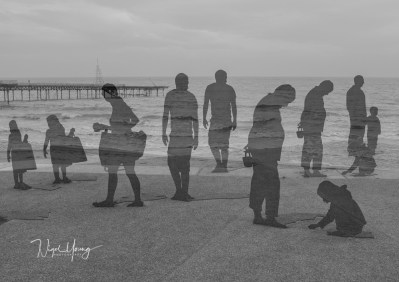
Colwyn Bay Promenade – Fuji X100F
In terms of photo gear its been all change – I started 2017 using Fujifilm kit – X-T2 and X-T10 bodies, an IR modified X-E1 body, and most of the Fuji X series lenses then available. To be fair this was overkill, and I couldn’t sensibly carry it all around (too heavy), and then couldn’t decide what to take each time I went out…. Not an unusual photographer’s dilemma! I needed to simplify things – one main body, a backup which would also do for travel/family when I wanted to travel light, and just a couple of good quality general purpose zoom lenses. So the search was on for a more compact kit that would still deliver the quality I was used to.
Until then I’d been looking at getting an X100 series camera again (I’d had 2 before) and while on a touch and try day at Cambrian Photography (see the photo I took using the X100F) I got to also try an Olympus PEN-F. Instant attraction! It does pretty much everything the X100F does (and some more too), but has interchangeable lenses, so I could pop a small prime lens on and have a really portable camera.
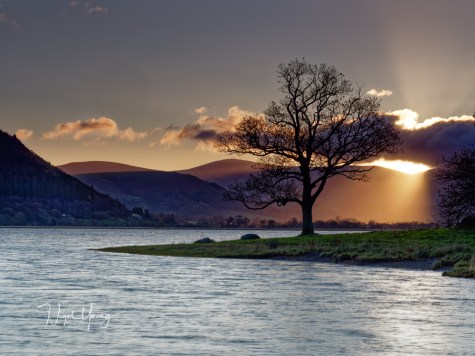
Sunrise – Bassenthwaite Lake
So, PEN-F and 17mm lens bought, and all my Fuji gear moved on… simple eh? Well, not quite. I still needed those zoom lenses (much more practical for landscape photos) and after a couple of false starts, ended up with the amazing Olympus 12-100mm Pro lens, and the PanaLeica 8-18mm super wide zoom. Both incredible lenses, but they don’t sit very well with the diminutive PEN-F body, which of course isn’t water resistant either – a bit of a worry when I was out in the rain. So that resulted in the purchase of another Olympus body – the pro-spec E-M1 mkii. What an incredible camera! – fast, tough, great quality images (despite the tiny sensor) and so many features its taken me a good few months to master all the options. Other than the occasional ‘wobble’ when I wonder if a full frame camera would give me better images (probably not, and too many other issues to contend with) this is my ultimate camera for landscapes. To be fair, its not a small camera, and my full kit with lenses, tripod and filters is still as much as I can manage, but at least there are no compromises.

Duke of Sutherland Boathouse, Ullswater, Lake District NP
Still have the PEN-F, although I’m still pondering what lenses work best for me – the small primes are neat, but don’t have the flexibility of a zoom, and the ‘travel’ zoom I currently have (the 14-150mm) does have a few limitations, so watch this space…
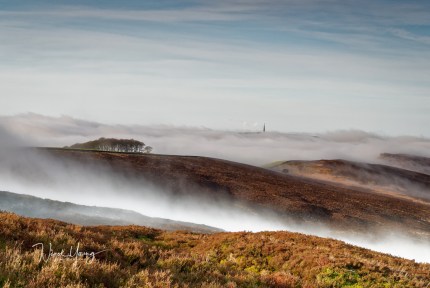
Roach End – Peak District NP
Despite time constraints, I have been out and about quite a bit with the camera in the last few months – I’ve been on several photo workshops and a ’tour’ in the Lake District, and discovered that the nearer parts of the Peak District are close enough to pop along for a few hours shooting, as is the North Wales coast. I have images from both areas I’m happy with. With more time hopefully available in 2018, visit plans include Cornwall, Scotland and Ireland, and maybe some more photos from Southern France, so watch this space!
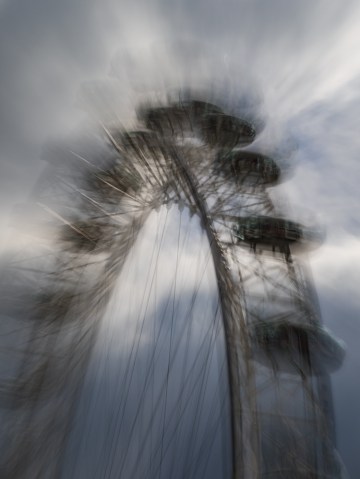
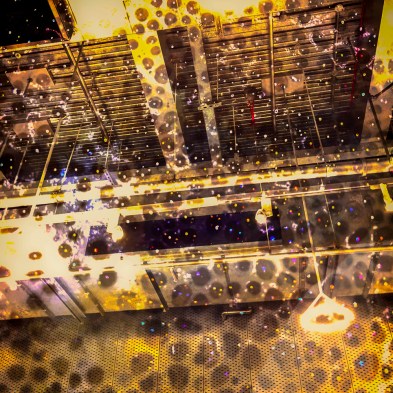
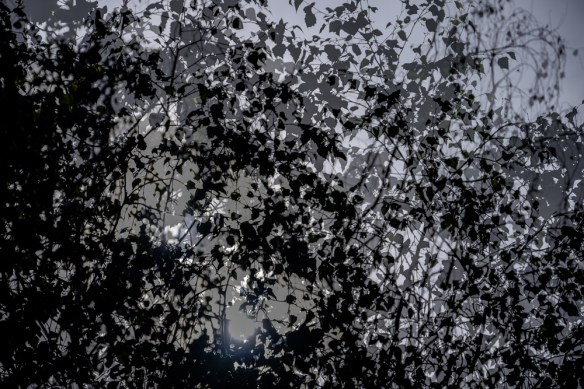
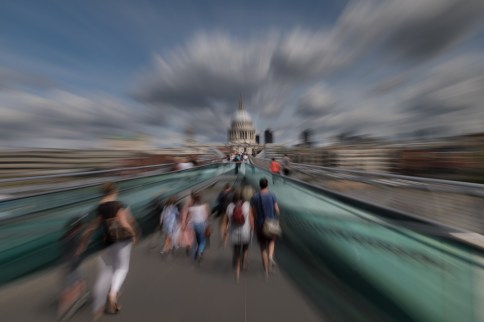
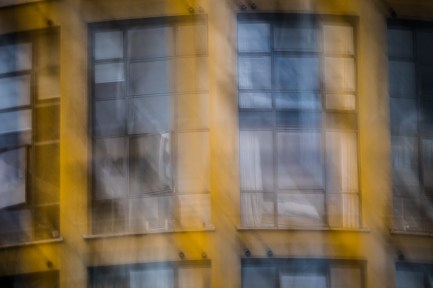

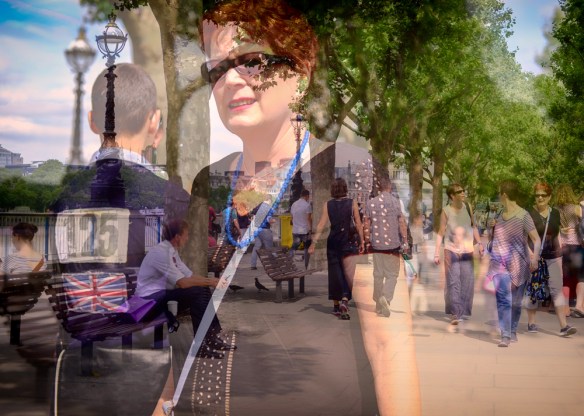
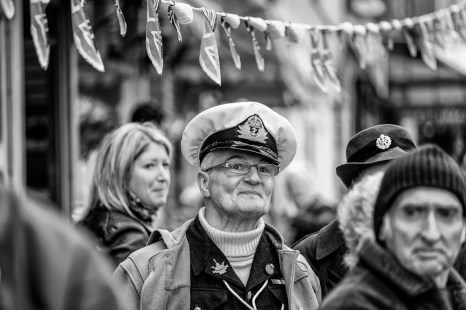 Popped along last week to the 1940s Festival held in Colwyn Bay, North Wales. For two days over the weekend, the town embraced the look, sounds and even the smells of the 1940s, with many different displays, and hundreds of people dressed in period clothes. There were displays of wartime foods and rations, fighting vehicles including armoured cars and jeeps, and of course soldiers, sailors and airmen from Germany, France, Canada and the UK. There was street dancing to ‘Glenn Miller’ style bands, a battle re-enactment and even a ball on the Saturday night (not that I stayed for that!)
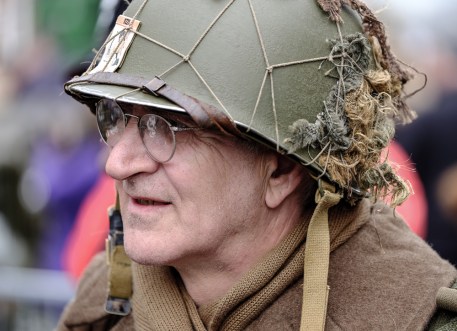 There were some excellent photo opportunities, and it was great to meet up with friends and customers of
 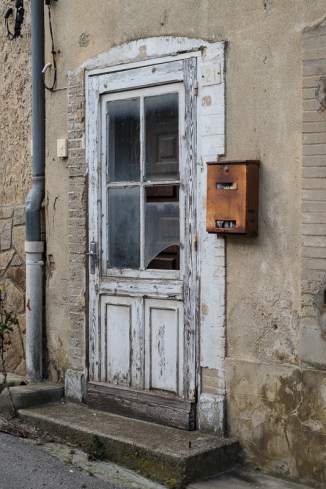 Our little village in France (Montréal, near Carcassonne, in the South West) has a history dating back over 1000 years to Cathar times, and has a pretty eclectic architectural heritage. The Collégiale, or main church, dates back to the late 13th century, although it is thought a primitive church existed here several hundred years before that. Much of the surrounding village was burned to the ground by the Black Prince in 1355, and the next 400 years saw the village repeatedly attacked as a consequence of the religious strife that dominated this part of France. As a result, many of the older houses in the village date back to the 17th and 18th centuries and these sit alongside houses that have been modernised since, often in a haphazard fashion. There are barely a handful of completely new houses in the main part of the village – all the new development has been carried out further afield.
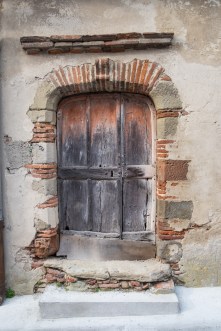 The somewhat diverse architectural styles in the village are reflected in the doors – not just to the Collégiale and the grand houses in the village centre, but all the smaller houses too. Every time I walk around the village I marvel at the sheer variety of styles of door on show, so for a bit of fun decided to do a mini photo project, recording as many of the different doors as I could. Camera used was (as it often is these days) the Fujifilm X-T10, this time with the 18-55mm zoom. No special technique here – just walk up, select a nice view of the door/doorway – often from the side as the streets are too narrow in some cases to use even the 18mm front-on. Photos are all RAW images, imported into Lightroom with a little ‘punch’ added, and some judicious cropping and further adjustment where needed. Here are a few of my favourites from my mini-project.
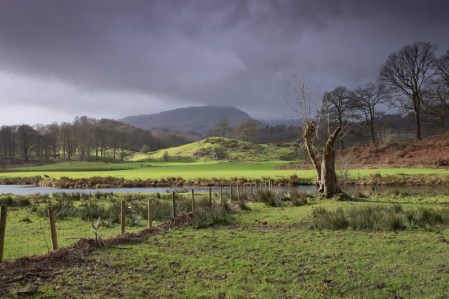 I had planned to try a couple of long exposure images using my new Hitech filter holder, but it was clear it was far too windy for sharp pictures, even with my heaviest tripod set as low as possible. The tops of the fells were shrouded in mist/cloud, but there were some brighter patches in the sky (nothing to actually call sun though…) Anyway, I found a nice view with a fence as lead-in, and set up and waited. After about 10 minutes, it had pretty much stopped raining, and I was rewarded with a few breaks in the cloud. The foreground was nicely bathed in sunlight – only for a few seconds, but enough to get a couple of frames including this one.
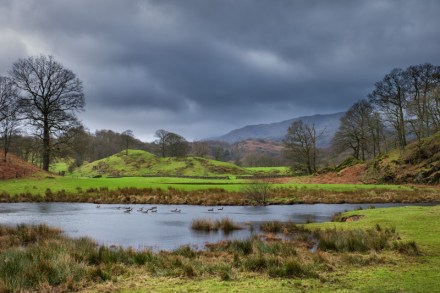 Wandering along looking for another view point, I spotted this family of ducks, and quickly set up. Within a few seconds they had moved into the perfect position in the frame, and as luck would have it, another fleeting moment of sunlight brought the scene to life. Time for one shot only before the ducks had moved on, and the sun had disappeared again!


 Nigel Young