A walk in the woods…

A7301246

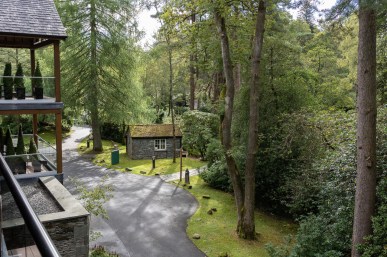
View from our balcony…

Our early autumn short break brings us back to one of my favourite places on Planet Earth – the Lake District. Specifically we are staying at the Brimstone Hotel, on the Langdale Estate, just outside Ambleside. Its a superb place – just 16 rooms, set aside from the main hotel here, but with full facilities and its own exclusive spa. Best of all is the ‘Reading Room’ – a kind of executive lounge with complimentary tea, coffee, snacks, beer, wine and soft drinks all day. Its a beautifully quiet spot, perfect for relaxing after a walk around the dales.

IMG_4548

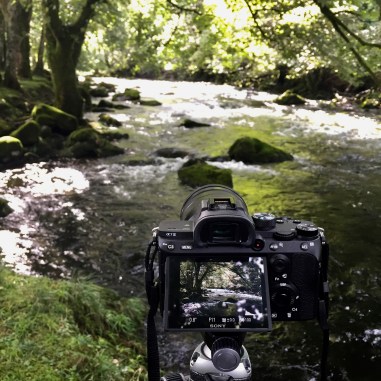
Ready to shoot!

So yesterday I ventured out on my own for a couple of hours with my camera gear. The hotel is surrounded by woods, and there is a river (Langdale Beck) just behind. So it wasn’t exactly far to go, and my short stroll through the woods and along the river turned up several beautiful locations for photos. Although it was a fairly bright day, the shade meant using the tripod for most shots and there were opportunities for some nice long exposures of the water.  I didn’t need to use a ND filter at all – just a polariser to cut through some of the reflections.

A7301277

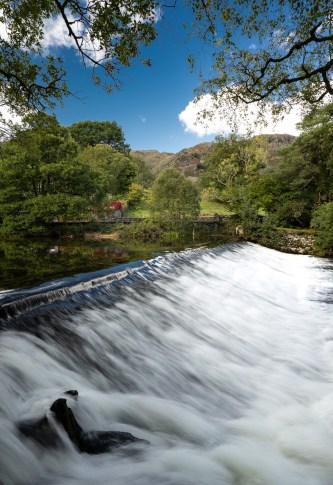
The weir at Chapel Stile

With my camera set up on the tripod and ISO set to 100, lens stopped down to f11 or f16, I was good to go. These photos are RAW files pretty much straight from camera, with the shadows lifted a little, and a little bit of ‘punch’ from adding clarity in Lightroom. I’ll probably tweak them a little more when I get them loaded onto my desktop as editing on a tiny 12″ laptop screen is never terribly satisfactory, but it gives me a good idea of how they should turn out.

All in all a very pleasant afternoon out and about, and a few photos I’m happy with. What’s not to like!

Gear used: Sony A7iii with 16-35mm or 24-70mm lens, Formatt-Hitec Firecrest polariser, Gitzo Mountaineer tripod.

This slideshow requires JavaScript.

Not a Smooth operator…

Last weekend’s charity walk was a great opportunity to shoot some video on my iPhone, but editing it later, I couldn’t help but think it was a little shaky in places – my hands certainly aren’t as steady as they used to be.

61ss8eYUq1L._SL1500_

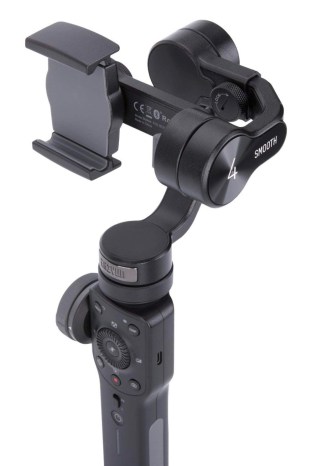
Zhiyun Smooth 4

I’d seen a number of reviews (mostly positive) about smartphone stabilisers or gimbals, so figured that £100 or so for one might be a good investment.  There were a huge number of rather superficial reviews for the DJI Osmo 2, but it did seem that Amazon customers in particular didn’t rate it too highly.  Further research brought up the Zhiyun Smooth 4 (same £129 price as the DJI Osmo 2) and that did get excellent reviews, other than for its apparent lack of compatibility with Android phones (not a problem for me of course). So one was duly ordered, and arrived yesterday. First impressions on opening the polystyrene carry case was ‘Wow! – this is big!” Although I’d seen photos of it, I kind of expected it would fold down to something that would fit in a modest man bag or sling type camera bag, but ‘noo!’ it doesn’t fold at all and is a good 40cm long.

IMG_31F2AFAF551F-1

The Zhiyun ZY Play app

Undeterred, I downloaded the Zhiyun ZY Play app, which allows it to control focus and zoom on the iPhone as well as on/off and subject tracking.  Once paired, it maintained position very well indeed, and the zoom knob on the side of the handle controlled the phone beautifully. I was thinking that maybe I could overlook the jumbo proportions and just get a bag big enough to carry it around, when the first disconnect with the phone occurred; it took me several minutes to restart the app and then resync my phone with the device, and then it happened again, and again…  Seems that if the phone goes into sleep mode, it drops the connection, and then the app can’t reconnect.  On one occasion, not only did I have to close and restart the app, but had to restart my phone too. Fiddling around to get it started again (getting frustrated now…) I got a warning to say my phone was almost flat, even though I had only charged it a few hours before! So an hour or so of carrying the kit around, and literally just a few minutes of actual video shooting runs a phone down completely… Zhiyun helpfully provide a power out USB connection on the unit for charging phones from its own internal rechargeable battery, but a) I didn’t have the requisite lead, and b) the lightning charge port on the phone was blocked when the phone was put in the cradle.

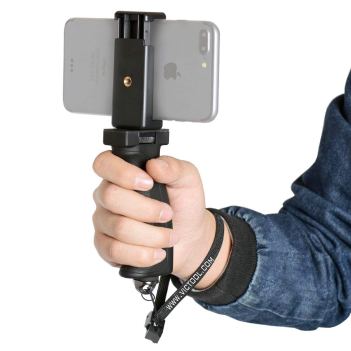
61yEKlJ3E8L._SL1200_So a fail all round, and the stabiliser, while a nicely engineered item with some good features, will be going back. Regardless of the fact that it isn’t as portable as I’d hoped, something unreliable and that drains the battery in the phone is never going to work for me. I think I may try just a simple pistol grip and phone holder next – no active stabilisation or zoom control of course, but I’ve a feeling it will help keep the phone steady. Happy days…

Here we go again…

A7300160

Daisy-Mae 85mm f1.8

There were so many things I loved about my two Olympus cameras, but ultimately I just didn’t find the overall image quality satisfying. The Pen-F was retro-chic, and had knock-out features like keystone correction, and Livetime mode (great for long exposures), and with smaller prime lenses gave me real portability.  The E-M1ii added pro-quality construction and ergonomics, Pro-capture for fast moving action, blazingly fast AF, and battery life that rivalled good old DSLR cameras.

Without doubt these cameras are superb for sport and wildlife (because the 2x crop factor brings subjects in that much closer) and there is a great array of compact and reasonably priced lenses available.  Sadly only the c. £1k Pro lenses make the best of the cameras (and these lenses are no longer small!) but even then, for me, images just didn’t have the ‘punch’ or saturation of cameras with larger sensors.  In poor light, or high contrast subjects where recovering detail from shadows is needed, they really fall down.

A7300161

Sony 85mm f1.8

So, even though it means going back to a larger, heavier setup and foregoing some of those unique Olympus features, the whole kit has gone, and the new kid on the block is a Sony A7iii. Resolution at 24mpx is a little higher, but this is a full frame camera so a sensor four times the size, and that really shows in image quality.  I can’t say I care for the Sony ergonomics – the body has lots of squared off corners – it just isn’t as ‘organic’ as the E-M1ii, and the button and menu layout aren’t exactly intuitive, but it does have great battery life, and the AF is ‘good enough’ for what I want. From all accounts its not as well weather sealed as the E-M1ii so I definitely won’t be taking it out in the rain!

tropic 180630

Sony 28-70mm ‘kit’ lens

Although my camera came with a fairly basic ‘kit’ zoom lens (it was the only way to get it quickly) my plan is to just use this for ‘walkabout’ or casual shooting, and get prime lenses for anything ’serious’. I’ve made a conscious decision to use just prime lenses with a limited range of focal lengths rather than wide-ranging zoom lenses – I’m hoping that rather than limit what I can shoot, it will actually enhance my creativity.  Without doubt it will mean sharper and crisper images – something of a holy grail for me.

A7300173

Sony 85mm f1.8

So far, in addition to that ‘cheapo’ everyday zoom, I’ve picked up the 85mm f1.8 Sony FE medium telephoto lens, a general purpose 35mm f2.8 Sony Zeiss lens, and a Zeiss Batis 25mm f2.8 wide angle. This latter lens was one I tried a few months ago at a Sony event, and the sharpness and contrast blew me away.  Still on the shopping list is a Sony Zeiss 55mm f1.8, but that is waiting for more funds!

All is looking good so far, and these are just a few photos I’ve taken in the week or so I’ve had the camera. Watch this space!

Pen-F does Keystone Compensation

Screenshot 2018-05-28 06.27.17

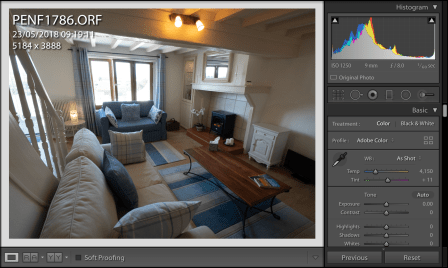
Image without correction – note how the room is distorted

Funny isn’t it, how our brain interprets what we see, but a photograph needs some help? When we look upwards at a tall building, the top is further away than the bottom, so appears smaller, but our brain compensates for this, and it all looks ok.  Take a photo of the same scene, with the camera tilted upwards, and in the 2D view we see, the building looks like it is toppling backwards – our brain only sees what is in the photo, not what it ‘wants’ to see.  This is called ‘keystoning’ and even a slight camera angle will show this effect. It’s the same in the horizontal plane too if we take a photo where the right or left of the scene is further away than the other. It’s even more ‘odd’ if the camera is pointing slightly downwards, as shown in this example.

Screenshot 2018-05-28 06.23.16

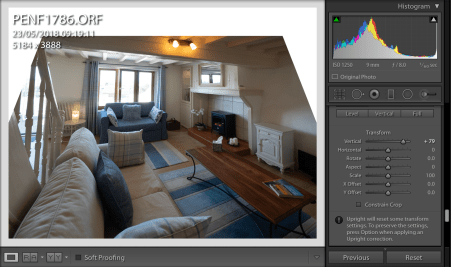
Image corrected but not cropped

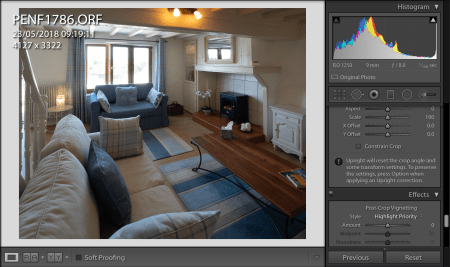
Photo processing software like Lightroom has a tool for ‘correcting’ this keystone effect – it ‘bends’ the image so the verticals appear upright, and all looks natural again. It works pretty well, but you then need to ‘crop’ or trim the image to remove the white space at the corners, and so you lose some of what you photographed at the extreme edges. Specialist lenses have been available for years that can deal with this effect in camera, but they are hugely expensive, and pretty tricky to use.

Screenshot 2018-05-28 06.26.00

Image corrected and cropped in Lightroom

Enter the Pen-F with its ‘keystone compensation’ feature.  Activate this, and you can actually then do the compensation when you take the photo, so ‘what you see is what you get’ afterwards. Hold the camera to get the angle and composition you want, and twiddle the rear control knob until the verticals line up, and press the shutter button.  It takes a second or so to process, but then ‘voila’ – there is the corrected image on the screen. Its a bit easier to do if the camera is on a tripod as you can more readily make fine adjustments, and the camera only produces a keystone-corrected JPG image rather than RAW file.

OLYMPUS DIGITAL CAMERA

JPG image corrected in camera, with minor adjustments in Lightroom

So maybe the image quality isn’t as good as shooting an uncorrected RAW file and correcting it afterwards in Lightroom, but if space is tight, you don’t want to risk losing a critical bit of the photo when processing. Going back and shooting the shot again isn’t always an option. Also, the time saved can be better used to make some final ‘tweaks’ or adjustments to enhance the image.

For shooting architecture etc, this is a ‘killer’ feature, and currently unique to the Olympus OM-D and Pen-F cameras.

Olympus does Motor Sport….

OLYMPUS DIGITAL CAMERAAlthough I have some reservations about using my Olympus Micro-Four Thirds (MFT) cameras for landscapes, one area where they come into their own is fast action photography like motor sports. The sensor on all MFT cameras is just one quarter the size of a so-called full frame camera, and although they can still deliver file sizes based on up to 20Mpx, the individual pixels are so-much smaller, so suffer from noise in low light or high contrast situations and this does limit things somewhat, in my opinion. MFT cameras do have a couple of particular advantages though, especially for action photography – the small sensor means that a given focal length lens is equivalent to a lens twice as ‘long’ as one fitted to a full frame camera, and for any given aperture will have a much greater depth of focus. So, in practical terms, the same ‘spec’ lens on an MFT camera will bring things in much closer, and more of the subject will be in focus.

OLYMPUS DIGITAL CAMERAMy camera, the Olympus E-M1 mk2, has one other killer feature – ProCapture. Whereas most cameras will focus on the subject when you half press the shutter, and then take one or more photos when you fully press it, Pro Capture starts recording as SOON as you half press the shutter, and ‘buffers’ or keeps the last 12 shots in its memory together with all those after you press the shutter, and these are then written to the memory card. So if you are shooting at one of the lower speeds, like 5 frames a second, you will get a couple of seconds worth of images BEFORE you make that final press of the shutter.  How many times have we been looking through the viewfinder waiting for action to happen, like a bird taking off, but by the time we react to the movement, the bird has gone. This camera lets you go back in time!

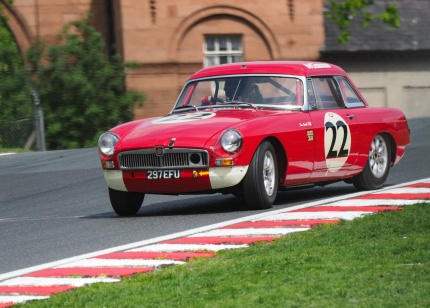
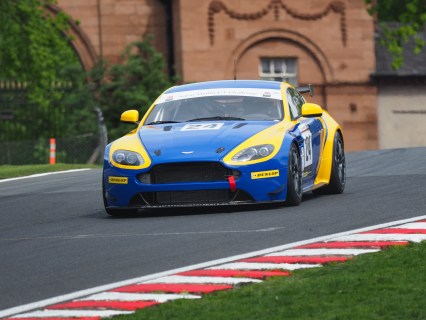
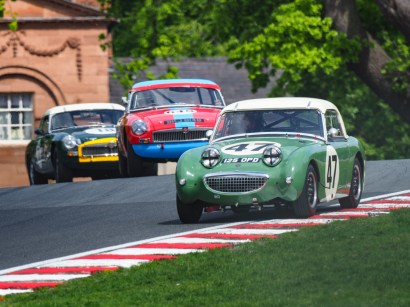
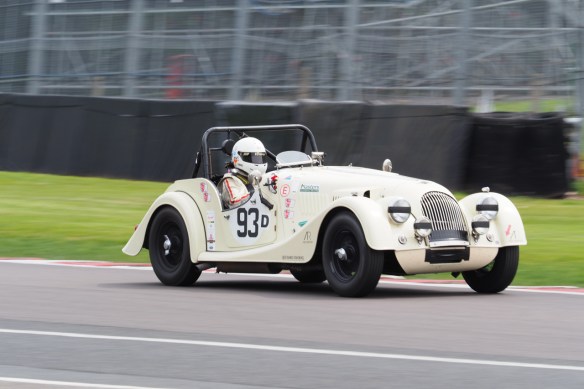
OLYMPUS DIGITAL CAMERASo last weekend I spent some time at a club motor race meeting at Oulton Park in Cheshire with those nice folks from Olympus UK Events. I already had my E-M1ii of course but was pleased to try both a 40-150mm Pro lens, and the 300mm f4 Pro lens (they were loaning out cameras too if anyone wanted to try those). A great opportunity to ‘try before you buy’ given that the 300mm lens is around £2000 to buy. Also on hand to help were Lewis Speight, one of the technical gurus from Olympus UK, and Mike Inkley, a pro sports photographer. So off we went trackside to record the cars that were racing that day – some modern sports/touring cars, but some classic sports cars too.

OLYMPUS DIGITAL CAMERALets just say that the equipment we were using was amazing – the ability to fill the frame and focus on fast moving cars from the other side of the safety barrier, and record bursts of up to 40 shots as the cars went past or crested the top of the hill at Lodge Corner!  I did however fill a complete memory card during my morning session – over 3000 images – so needless to say sorting through these and picking the best from each sequence took some time!

Suffice it to say, I would thoroughly recommend this setup for sport photography…

North Coast 500 Adventure – Part 1

OLYMPUS DIGITAL CAMERA

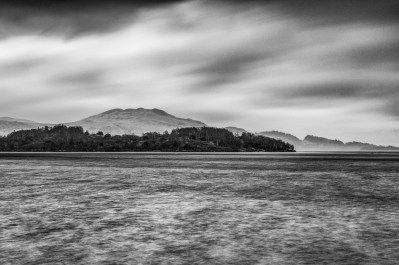
Loch Lomond (in the rain)

Our first road trip for quite a while, and top of my bucket list, the North Coast 500 (NC500) is marketed as Scotland’s answer to US Route 66. Roughly 500 miles long, it starts and finishes in Inverness, and pretty much follows the coast road around Northern Scotland. Planned as a holiday rather than a photo trip, there was obviously going to be lots of photo opportunities, but not much time for considered and contemplative photography – right from the outset I figured it was going to be pretty much snapshots only. So, no filter systems, just my Olympus E-M1ii camera and 12-100mm ‘superzoom’ lens, and a Pen-F and 17mm as ‘backup’.

OLYMPUS DIGITAL CAMERA

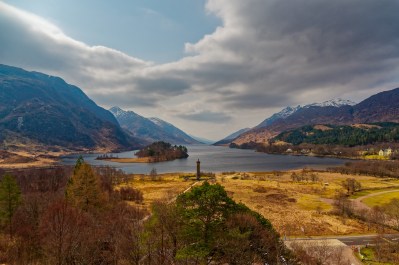
Glenfinnan

Starting from home in Shropshire added another 250 miles each way to the start point, so it was more like a NC1000 for us! It all started in rather damp fashion, with a grim drive in the rain through the M6 roadworks in Cheshire. Fortunately the rain eased off after that and we got to our first overnight stop on Loch Lomond without incident, although the rain made another appearance. Staying in the excellent Lodge on Loch Lomond overnight, with the added bonus of a sauna in our (upgraded) room set us up for what turned out to be an eventful second day.

OLYMPUS DIGITAL CAMERA

Ferry Crossing

It started well enough, with a steady drive up through beautiful Glencoe, followed by a brief stop in Fort William to take in an exhibition of Scottish Landscape Photography.  All good stuff.  Then the plan unravelled – the swing bridge at Spean Bridge on the A82 had jammed in the open position, totally blocking the route northbound.  Rather than waiting until it was hopefully fixed, or taking a 90 mile diversion, we opted to cut across to Mallaig via Glennfinnan, and take the ferry to Skye, before crossing back to the mainland and working along the coast.  We had an anxious hour’s wait as the ferry was fully booked and we had to go standby!  Fortunately they squeezed us on, and we had a bracing 35 min journey across The Sound of Sleat to Ammandale, incidentally pretty much the only way to Skye before the Skye Bridge was opened in 1995. Not so lucky were the dozen or so cars in the queue behind us – they had wait for the next ferry 2 hours later… So it was then a straight drive to Broadford, and across the Skye bridge to pick up our original planned route – we were on Skye for just 25 minutes!

OLYMPUS DIGITAL CAMERA

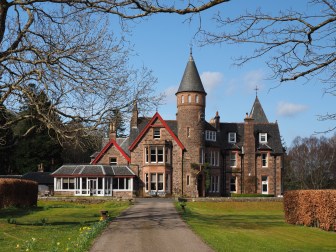
The Torridon Hotel

After a further couple of hours driving on fairly twisty and narrow (sometimes single track) roads, it was a relief to get to our hotel in Torridon – straight into the bar for a well deserved gin and tonic! A decent enough gin selection, but nothing compared to the almost 400 whiskies on offer! A beautiful hotel, albeit at the top of our budget, but so full of Scottish style and charm.

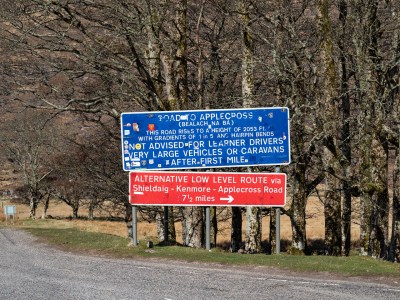
Up bright and early next morning (more sunshine too!) for our first ‘serious’ part of the NC500 – the Applecross Peninsular, and the infamous Bealach Na Ba pass through the mountains.  Reaching just over 2000ft at its highest point, this is not a road for the faint-hearted, or for camper vans – one section is very narrow indeed, with a gradient of 1 in 4, a series of hairpin bends, and

OLYMPUS DIGITAL CAMERA

Start of Bealach Na Ba

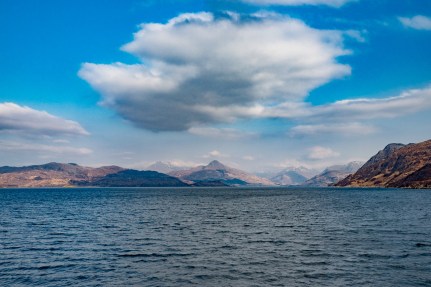
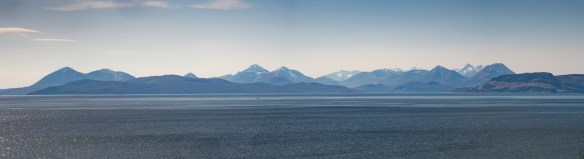
very steep drops just beyond the crash barriers! However, the views are simply amazing, looking out across the hills towards Loch Carron in the south, and Skye and its outlying islands to the west. After a brief stop at the summit viewpoint to take in the vista, it was all the way down again into the quaint little village of Applecross with its beautiful, if rather stony beach.  A quick lunch at the excellent Applecross Inn and we were off again, along the coast road back towards Shieldaig.  More amazing scenery as we tracked along the coast – mountains to our right, and sea to the left, with Skye and its islands of Rassay and Rona in the distance. With so much to see, and so many places to stop off and admire the views, it took us a good couple of hours to make the return journey to the hotel.

OLYMPUS DIGITAL CAMERAAn amazing day, and one that completely surpassed our expectations. Roll on tomorrow, and Part 2!

Time for a fresh beginning…?

‘When subject matter is forced to fit into preconceived patterns, there can be no freshness of vision. Following rules of composition can only lead to a tedious repetition of pictorial clichés’ – Edward Weston

XT106685

South Bank, London

In the almost 60 years since I first picked up and used a camera, photography, in my opinion, has become both easier, and harder… Yep, today’s all-singing digital cameras and phone cameras with their mega-pixels and auto-everything are a far cry from Box Brownies, or 35mm SLRs where everything was manual; then it was days or weeks after you shot your pictures before you saw the results (and were frequently disappointed!)

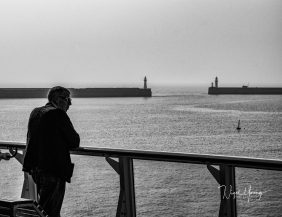
Waiting

Dover Harbour

But now,  just about everyone can take a good picture – walk up, ‘click’ with your phone camera/compact camera/DSLR and there you have it – immediate result. No longer any need to understand and put into practice the technicalities of film photography like ISO, aperture, DOF and shutter speed – just ‘point and press’. No bad thing, but these days everyone is a photographer. Estimates vary, but I saw one that reckoned over 1.8 trillion photos were taken and uploaded last year! Talk about over-exposure.

4b7af-xt103898

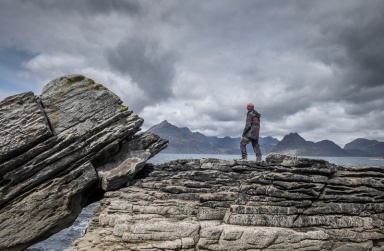
Elgol, Skye

A few years back, I was at a low ebb with my photography – I had all the latest gear, but it was all so heavy I never really wanted to go out making photos, and when I did, I rarely came back with anything I was happy with. So I changed everything and downsized, and that helped some – the new system I had was somewhat lighter, but at the expense of image quality, and in reality, by the time I bought the best lenses, I hadn’t gained a huge amount in portability. But I persevered, thinking that by working harder at it, I would take better photos. I’ve read lots about photography, joined social media groups and been on umpteen workshops and courses, but…………

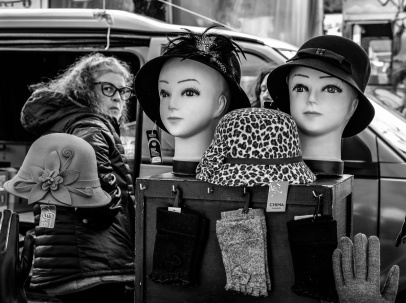
Saturday Market, Revel

Street Market, France

What I’ve come to realise is that despite a near obsession with photography,  I’m not really getting that much out of it – I think that going to the same places that everyone else goes to, and setting up the same type of sunset/sunrise/long exposure shots is leading to a total lack of creativity.  Its not helped by the fact that everywhere you look on forums and Twitter/IG etc, there are the same shots in the same places etc, so you pretty much end up following suit. I’m less inclined these days to go out yomping around hills loaded down like someone from the SAS – I’m not getting any younger! Then of course there’s the issue of going to all that bother when other folks will get still better results because they are using bigger and better gear, or dedicate more time to photography than I want to.

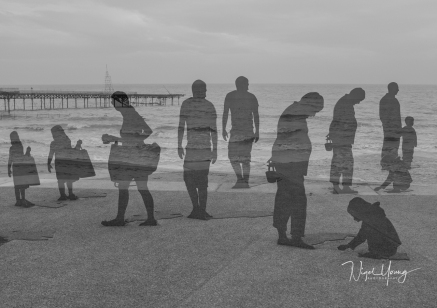
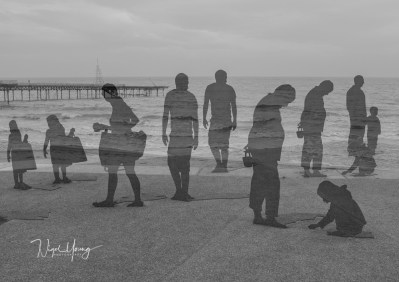
Shadowy figures

Colwyn Bay, North Wales

Looking at what I’ve shot over the last year or two, I’m really disillusioned – I’ve got lots of ‘ok’ landscapey shots, mostly technically fine, but very few ‘wow!’ shots. Hardly anything that stands out. Technically competent, but no creativity. Certainly no real satisfaction. I need to go back to shooting what grabs me, not the clichéd shots that you see all over social media and I am (even subconsciously) trying to emulate. I think some of the shots I took 10 or 20 years ago are ‘better’ in a creative sense than what I’m doing now. Bit of a watershed really…

I’m starting by going through my back catalogue, and just picking out what I consider to be creative, rather than just me-too photos. I’ve started to update my website to reflect that.
I’ve made a conscious decision that in future I will shoot for ME, and not to please others. If people like what I shoot, that’s fine, but I’ve spent too long conforming to expectations.
Here are a few of my photos that I DO like. Some are traditional landscapes, but I like them nevertheless. Here’s to that creative new beginning…

This slideshow requires JavaScript.


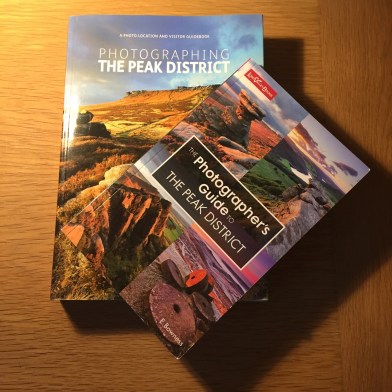
Peak District Photography Books

Oddly, although we’ve been living just an hour or so from the southern edge of the Peak District for almost 10 years, its only this year that I’ve thought about taking photos there. Its not an area I know well either, so I was keen to get some idea of where would be best to start, so after a little research, bought these two photography guides:

The Photographers Guide to The Peak District, by E.Bowness.  Long Valley Books. £12.99

Photographing the Peak District, by Chris Gilbert and Mick Ryan. Fotovue Books. £27.95

IMG_3604Both books are very helpful, and indeed I do use both of them.  The E.Bowness publication is a handy, pocket-sized book – just 107 pages in total, well illustrated, with useful suggestions of locations, grid references for parking etc. It covers the most popular photo locations, and has a very neat index at the back that not only lists all these locations, but grades them by type, level of photo interest, distance from parking and difficulty of access. Its not that detailed a book, but handy nevertheless – I’ll often use it when planning a trip.

The Chris Gilbert book on the other hand is far more comprehensive – a larger format book, with almost 500 pages covering the vast majority of places of interest in the Peak District.  The photos are superb, and there are both photos and suggested viewpoints for different times of day, and different seasons. Its a weighty tome, and I do find that on occasion it’s helpful to copy a page or two to take when I am out walking and photographing rather than take the whole book! The level of detail is sometimes overwhelming, and I find its most useful when I want detailed information, or to research all the worthwhile spots in a given location.

I thoroughly recommend buying both books if you can stretch to it (both are available from Amazon, frequently at a reduced price), but if not, get the Bowness book if you just want an intro to the most popular photo locations, and think the index would be useful, or the Chris Gilbert book if you want a more comprehensive guide. Both will serve you well!


It’s been a while….

Well, here I am again after a lengthy time since last posting.  Other priorities (mainly family) took over most of last year, but at least I have found time to take a few photos, so lets have a little update and take it from there…..

Shadowy figures

Colwyn Bay Promenade – Fuji X100F

In terms of photo gear its been all change – I started 2017 using Fujifilm kit – X-T2 and X-T10 bodies, an IR modified X-E1 body, and most of the Fuji X series lenses then available. To be fair this was overkill, and I couldn’t sensibly carry it all around (too heavy), and then couldn’t decide what to take each time I went out…. Not an unusual photographer’s dilemma! I needed to simplify things – one main body, a backup which would also do for travel/family when I wanted to travel light, and just a couple of good quality general purpose zoom lenses. So the search was on for a more compact kit that would still deliver the quality I was used to.

Until then I’d been looking at getting an X100 series camera again (I’d had 2 before) and while on a touch and try day at Cambrian Photography (see the photo I took using the X100F) I got to also try an Olympus PEN-F. Instant attraction! It does pretty much everything the X100F does (and some more too), but has interchangeable lenses, so I could pop a small prime lens on and have a really portable camera.

OLYMPUS DIGITAL CAMERA

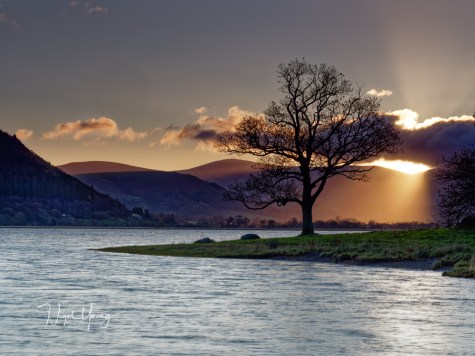
Sunrise – Bassenthwaite Lake

So, PEN-F and 17mm lens bought, and all my Fuji gear moved on… simple eh?  Well, not quite.  I still needed those zoom lenses (much more practical for landscape photos) and after a couple of false starts, ended up with the amazing Olympus 12-100mm Pro lens, and the PanaLeica 8-18mm super wide zoom. Both incredible lenses, but they don’t sit very well with the diminutive PEN-F body, which of course isn’t water resistant either – a bit of a worry when I was out in the rain.  So that resulted in the purchase of another Olympus body – the pro-spec E-M1 mkii.  What an incredible camera! – fast, tough, great quality images (despite the tiny sensor) and so many features its taken me a good few months to master all the options. Other than the occasional ‘wobble’ when I wonder if a full frame camera would give me better images (probably not, and too many other issues to contend with) this is my ultimate camera for landscapes. To be fair, its not a small camera, and my full kit with lenses, tripod and filters is still as much as I can manage, but at least there are no compromises.

OLYMPUS DIGITAL CAMERA

Duke of Sutherland Boathouse, Ullswater, Lake District NP

Still have the PEN-F, although I’m still pondering what lenses work best for me – the small primes are neat, but don’t have the flexibility of a zoom, and the ‘travel’ zoom I currently have (the 14-150mm) does have a few limitations, so watch this space…

OLYMPUS DIGITAL CAMERA

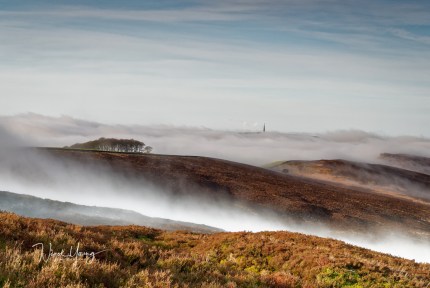
Roach End – Peak District NP

Despite time constraints, I have been out and about quite a bit with the camera in the last few months – I’ve been on several photo workshops and a ’tour’ in the Lake District, and discovered that the nearer parts of the Peak District are close enough to pop along for a few hours shooting, as is the North Wales coast.  I have images from both areas I’m happy with.  With more time hopefully available in 2018, visit plans include Cornwall, Scotland and Ireland, and maybe some more photos from Southern France, so watch this space!

No Tripod Allowed

XT106875-Edit

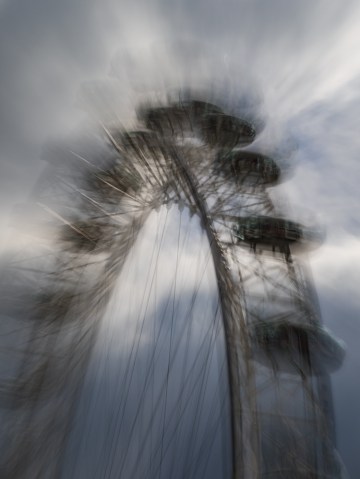
London Eye – Fuji 50-140mm

A combination of illness and family commitments means my Fuji cameras haven’t seen much action over the last month or two, but a couple of weeks ago I was booked on a Light and Land ‘Impressions of London’ workshop with Valda Bailey (Twitter – @tanyards) and Doug Chinnery (Twitter – @dougchinnery) and really didn’t want to miss it. Although I have been taking photos for over 50 years, and feel pretty confident with landscape and urban subjects, I’ve sensed my photography was in something of a rut lately and wanted to try a different approach. So off I headed to London, slightly intimidated by the joining instructions that stated that tripods were not allowed and would be ‘thrown in the Thames’! The reason for this became obvious fairly quickly – this workshop was all about experiencing different techniques like Intentional Camera Movement (ICM), Multiple Exposures and Zoom Pulling, and without the ‘straightjacket’ of a tripod, and the front-to-back sharpness that most photographers are programmed to produce, there would be ample opportunity for creativity and abstract impression. And, boy, was it a different experience!
IMG_2073-Edit

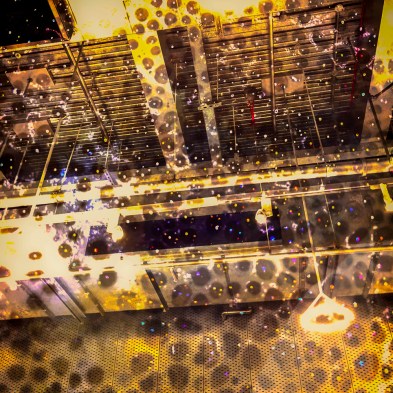
Tate Modern Café – iPhone 6

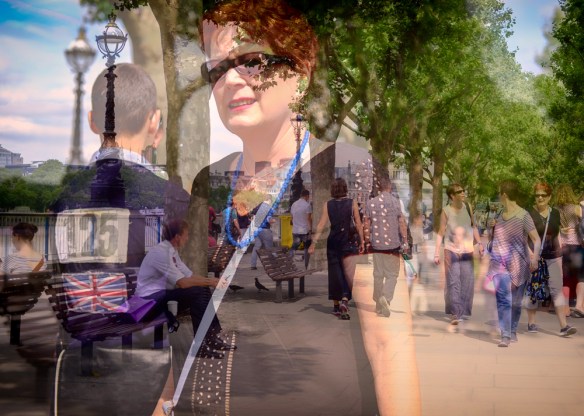
From the outset, it was clear this was going to be a great day; the weather was kind – mainly sunny with cloudy intervals; the location was great – the South Bank near Tate Modern; Doug and Valda were great tutors, and it was a small but enthusiastic group, keen to learn new techniques. After our initial briefing, where it became obvious that my Fuji X-T1 would have some shortcomings (more on this in a moment) we all worked individually to try and capture images that broke all the conventional rules, but still worked.The instructions were clear – experiment, take lots of photos, look for unusual angles, textures, colours and combinations.  Try to build up images from different elements that complimented one-another in some way.  Overlay patterns and abstracts on defocussed main images, and think about how images could then be further worked on via post-processing.
XT106514

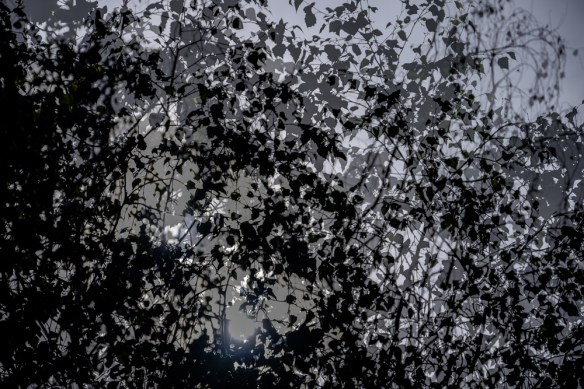
Trees, South Bank – Fuji 16-55mm

So the start point for me was multiple exposure images and this is where the limitations of Fuji cameras compared to Canon and Nikon DSLRs became apparent.  Some of the Canon cameras can take up to 9 shots to create a single image.  Not only that, but each is created as a RAW file, the individual shots making up the image can be saved individually, and there are multiple modes for blending the images together (like the layer blend modes in Photoshop). The Fuji cameras (X-T1 and XT10 anyway) are much more simplistic – only 2 exposures, a single ‘general’ blend mode, and the only image saved is a JPG of the multiple exposure itself – no original files to go back and have another go with at home… Although this was clearly limiting on the day, I did nevertheless manage several multiple exposure images I was pleased with. Maybe more sophisticated multiple exposure options could feature in a future Fuji firmware upgrade?
XT106638

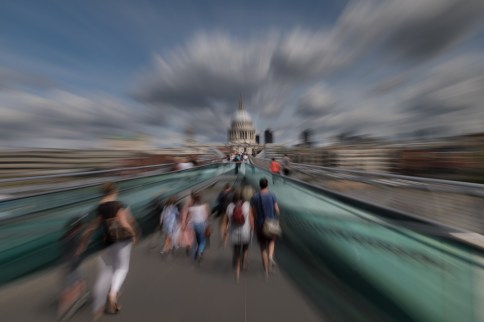
Millennium Bridge – Fuji 16-55mm

Next was Zoom Pulling – twisting the zoom ring during a shot. I found that exposures around 1-3 seconds worked best for this technique – too short an exposure meant there was little effect, while too long an exposure meant all detail was lost.  This is a pretty well known and often over used technique, so to my mind needs to be used with care. First time I think I’ve used it though, and some interesting results, especially with quite bold subjects.
XT106685

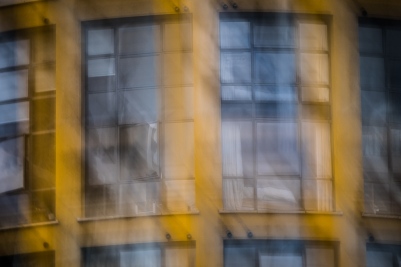
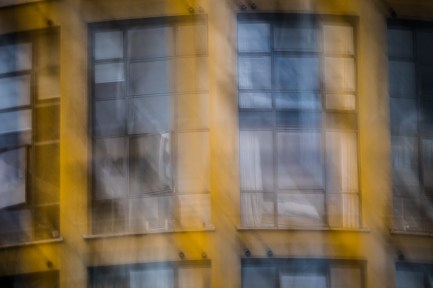
South Bank Apartments – Fuji 50-140mm

Intentional Camera Movement (ICM) is exactly that – moving the camera side to side, up and down, backwards and forwards, or twisting it, all during the exposure.  This can create weird and wonderful shapes, with these images used alone, or as part of a multiple exposure final image. One interesting thing I found was when using my 50-140mm lens with the image stabilisation switched on. During exposures of 2-3 seconds, providing the camera was not moving too quickly the IS would ‘lock on’ several times during the shot, giving the appearance of a multiple exposure – quite a pleasing result in some cases.

XT106860

Golden Jubilee Bridge – Fuji 50-140mm

These techniques (and Valda is a master) are becoming popular, as evidenced by the fact that this month’s UK photo press are carrying a couple of articles about it, so its definitely here to stay.  We were of course mainly shooting architecture and urban views, but I can see it would work equally well with landscapes, nature and even macro. What is rather good is that you don’t need to carry a complete bag of gear (as I did!) to capture these images – a mid range zoom lens is sufficient, and no real need for the highest resolution sensor either. I did find that switching filters to get the correct long exposures during changeable light was tricky – I think a variable ND filter would probably be quite helpful here.

So, I have several hundred images from the day – a few of which I am happy with as they stand, and a good number that can be worked on, either individually or combined in Photoshop.  I can’t wait to get out and try these techniques again – its not often you learn something new after 50 years of doing pretty much the same thing!

Thanks to Doug and Valda (and Light & Light for their great organisation) for a super day out, and a new creative angle for me to further explore!
160725 london street-6

South Bank – Fuji 35mm f2